
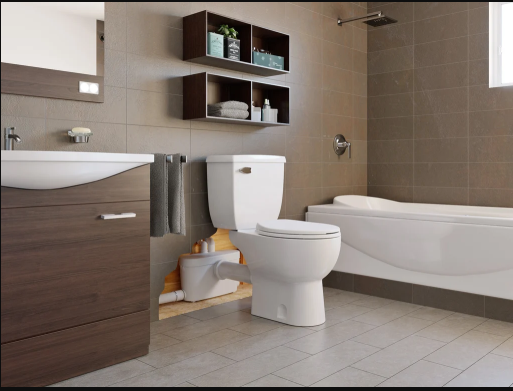
Basement bathrooms are attractive additions to homes, hotels, offices, and commercial properties, but drainage can be more complicated below ground level. The central issue is simple: conventional wastewater drainage depends on gravity, but a basement fixture may sit below the available sewer connection.
This is why basement bathroom planning needs to consider wastewater evacuation from the beginning.
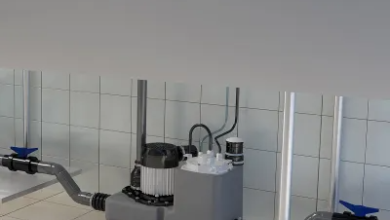
One possible solution is a macerator or lifting system. Instead of relying on gravity alone, the system collects wastewater and pumps it upward to the appropriate drainage point.
This approach can be useful when converting an existing basement into a bathroom. Rather than excavating a large section of flooring to create new gravity drainage, a compact pumping system may provide an alternative, depending on the site’s layout and local plumbing requirements.
For a complete basement bathroom, the equipment needs to be compatible with the fixtures being installed. A WC, washbasin, bidet and shower can generate different types and volumes of wastewater, so the pumping system should be selected accordingly.
SFA’s Saniaccess 3 is designed for complete ensuite bathroom applications and can handle wastewater from a WC, basin, bidet and shower. The manufacturer states that the system can pump wastewater up to 5 metres vertically or 100 metres horizontally, subject to the hydraulic installation conditions.
Another consideration for a basement is maintenance access. Equipment installed in a difficult-to-reach location can become inconvenient if servicing requires dismantling surrounding fixtures or structures. Saniaccess 3 incorporates access points intended to make servicing possible without removing the entire unit.
Noise can also matter in residential basements. A bathroom located below a bedroom, living area or entertainment space should be designed with the overall acoustic environment in mind. Selecting equipment designed for quieter operation can therefore be part of the planning process.
The discharge route also deserves attention. The pump’s maximum stated lifting capacity does not automatically mean every installation can use that full distance. Vertical lift, horizontal pipe runs, bends and other hydraulic factors can influence actual performance. A qualified installer should assess the proposed route before installation.
Good installation practice is equally important. The pump needs to be positioned according to the manufacturer’s instructions, with appropriate pipework, electrical connections and access for maintenance.
A basement bathroom can be a valuable way to make unused space more functional, but drainage should never be treated as an afterthought. The wastewater route needs to be designed alongside the bathroom itself.
Where conventional gravity drainage is impractical, a suitable macerator can provide another option. For projects requiring a WC, basin, bidet and shower, SFA’s Saniaccess 3 bathroom macerator pump is one product that can be considered as part of the drainage design.
The right solution will depend on the basement’s elevation, pipe route, connected fixtures and local installation requirements. Proper planning can make the difference between a convenient basement bathroom and a drainage system that becomes difficult to maintain.